


Horse Ranch
4.5243.00 Reviews
App Specs
- Version
- 1.0.15
- Updated On
- License
- Free
- Downloads
- 50,000+
- Developer
- Ketchapp
- Categories
- Arcade
- Platform
- Android
Screenshots


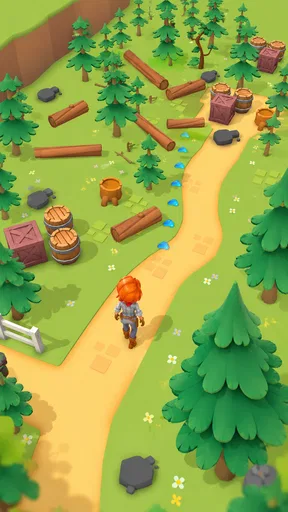

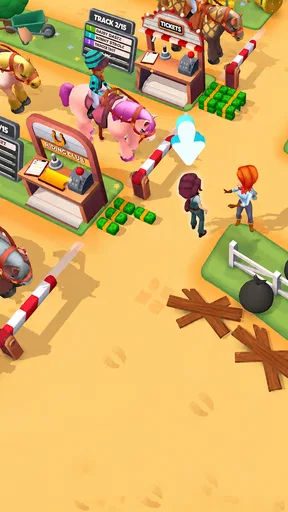
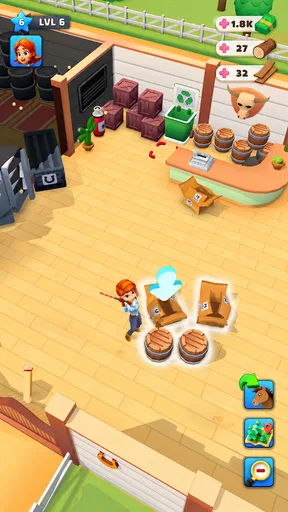

 Analysis by AppCompare
I found Horse Ranch most appealing as a small, easy-to-share arcade game rather than as a serious management simulator. The idea is simple: build up a ranch, collect what you need, and turn that progress into a horse-riding business. That combination gives the game a pleasant rhythm for short sessions, especially when I want something lighter than a competitive action title.
What makes it interesting in a household is that the game can sit comfortably on a shared phone or tablet without demanding a long uninterrupted commitment. One person can make a little progress, hand over the device, and let someone else continue. That sounds modest, but it changes how useful a casual game feels when the device is used by several people.
Horse Ranch is a free arcade game from Ketchapp, rated for Everyone. It has reached over 50 thousand installs and holds a 4.5 average from around 1.5 thousand ratings, which matches my impression that its main appeal is immediate accessibility rather than deep complexity. There are in-app purchases ranging from $0.99 to $49.99 per item, so the free entry point is friendly, but shared-device users should still think about how purchases are handled before passing the game around.
How the ranch works in everyday play
I’d use this section to focus on the practical shape of a shared session: one person can gather resources, then leave the next player with a clear decision about what the ranch needs. I find that a quick handover works better than trying to coordinate every move, keeping the game casual while giving the next turn a useful starting point.
A good fit for passing the device around
I can easily imagine Horse Ranch being played in a living room while a family waits for dinner, during a quiet break, or on a tablet that several people use at different times. The ranch theme gives each session a visible sense of purpose: gather resources, improve the property, and support the riding business. Even without treating it like a formal turn-based game, the progress is easy to understand when another person opens it later.
The strongest shared-use quality is its low explanation cost. A new player does not need a long briefing about a complicated control scheme or a large set of rules. I would hand over the device and explain the immediate goal in a sentence: collect useful materials, expand the ranch, and keep the horse business moving. That makes it more suitable for mixed-age play than an arcade game built around precise timing or rapid reactions.
There is also a practical limit. The game is not automatically a cooperative experience just because several people use the same device. The person holding the device is the one making the decisions, and an enthusiastic helper can easily spend resources or change the direction of the ranch. I would treat shared play as informal collaboration, not as a protected multiplayer arrangement.
Worth Reading Before You Choose

Flipboard Shows What News Apps Must Do Beyond the Feed

Switching to Android Auto Means Rethinking Your Driving Routine

Google Calendar Makes a Crowded Week Easier to Manage

Ludo King Makes the Most of the Minutes Between Plans

Baby Panda World Brings Quick Play to Modern Phones, but Its Game Library Feels Busy

ESPN’s Live Game View Makes Following Close Games Easier
Why the arcade format matters
Horse Ranch benefits from keeping its central loop understandable. In a more elaborate simulation, I might spend more time comparing menus, balancing several types of income, or correcting a poor early decision. Here, the ranch-and-riding-business premise gives the activity a clearer line from action to reward. That is useful when I only have a few minutes and do not want to study a manual before enjoying the game.
Compared with a traditional horse-riding game, this one puts more attention on the place around the horses and the work needed to keep the business moving. Compared with a farming or idle-management alternative, the horse theme gives the progress a more personal focus. The trade-off is that players looking for detailed riding technique, realistic animal care, or a large economic sandbox may find the arcade approach too light.
I also would not choose it as a replacement for a fast reflex game. Its appeal comes from building and gathering, not from the intensity of a score-chasing arcade challenge. That makes it calmer and more approachable, but it may feel less exciting to someone who wants constant action, difficult timing, or a leaderboard-driven reason to replay the same stage.
Setting expectations before anyone starts
Because the game is free to download, it is easy to install casually and let several people try it. The important conversation is not about access to the game itself; it is about who is allowed to make purchases and who is allowed to spend earned resources. The listed purchase range reaches from $0.99 to $49.99 per item, so I would not assume that a shared device automatically creates a safe boundary.
My preferred arrangement is simple: one person takes responsibility for purchases, while everyone else plays within the available game progress. If a child is using the device, I would make the rule clear before opening the ranch: play is fine, but no purchase button should be treated as part of normal progression. This is not a criticism of the ranch concept; it is just sensible housekeeping for any free game with optional paid items.
I would also decide whether the device is being used for one continuing ranch or for separate attempts. A single ranch works well when the household enjoys building one shared project. It works less well when two people have different ideas about expansion. One player may prefer saving resources for a larger improvement, while another may spend them immediately because quick visual progress feels more satisfying.
Boundaries that prevent arguments
The most useful boundary is deciding who has the final say over the ranch. That person does not need to play every session, but everyone should know whether the project is shared or personal. If it is shared, I would agree on a basic rule such as saving important resources until the players have discussed the next expansion.
A second boundary is session length. Arcade games are easy to extend with the thought that one more task will make the ranch noticeably better. On a shared tablet, that can turn into an argument about whose turn it is. A short handover routine helps: finish the current activity, explain what was collected, and say what the next goal should be. That keeps the game welcoming instead of making progress feel like something one person has taken over.
A third boundary concerns accidental changes. I would avoid handing the device over while a purchase screen, a major upgrade choice, or an important confirmation is open. The next player may tap through quickly without knowing what the choice means. Taking a moment to return to the ordinary play screen is a small habit, but it protects the shared project from avoidable mistakes.
Coordination without turning play into homework
Horse Ranch is at its best when coordination stays light. I would not create a complicated household schedule for it. Instead, I would use the ranch as a common topic: one player gathers materials, another looks at what the property needs, and a third decides whether the current resources are better spent on expansion or on keeping the business moving.
This can be surprisingly useful for younger players who enjoy visible goals. They can practice waiting, explaining a choice, and thinking about whether an immediate reward is worth delaying a larger improvement. The lesson is not deep financial planning, and I would not present it that way, but the game naturally creates small decisions that are easier to discuss than abstract rules.
The best coordination tip I found is to name the next goal before ending a session. “We are saving for the next ranch improvement” is more helpful than simply saying “I played.” It gives the next person a clear starting point and reduces the chance that resources will be spent without context. This is especially valuable when several people use the same profile or device and nobody has a private record of what they intended.
Another useful habit is to separate collecting from spending when possible. A player can gather resources first, then pause and show the others what is available. That creates a natural decision point and makes the shared ranch feel deliberate. Spending immediately may be satisfying, but waiting gives the household a better chance to agree on priorities.
What younger players may enjoy
The Everyone age rating makes the game an approachable choice for a broad household audience. The horse setting is easy to understand, and the business-building layer gives children something to organize beyond simply tapping through an action. I would expect the strongest appeal for players who like animals, decorating or expanding spaces, and seeing a small project grow over time.
Still, an age rating is not a substitute for supervision. Younger players may understand the ranch goal while not fully understanding the difference between game progress and paid purchases. I would explain that a free download can still contain optional items that cost real money, then keep the purchase decision with an adult. That conversation is more important on a shared device because several people may have access to the same game session.
For older children and adults, the question is less about whether the game is understandable and more about whether it offers enough depth. Someone who wants a demanding simulation may quickly notice that the arcade structure simplifies the experience. Someone who wants a relaxing horse-themed activity may appreciate exactly that simplicity. I would choose it for the latter group and avoid presenting it as a full ranch-management substitute.
Trust and the shared profile
Trust matters more than technical organization here. When several people contribute to one ranch, every player needs to accept that the property will not always develop according to their personal plan. One person may care about collecting efficiently, while another mainly wants the riding business to look active and rewarding. The game can support both attitudes, but the household has to decide how much freedom each player gets.
If the device is passed between family members, I would keep the handover verbal and brief. Say what was completed, mention any resource-saving plan, and point out whether the next choice is routine or important. This is a more reliable system than expecting everyone to remember exactly what the previous player intended.
I would also be cautious about letting a very young player play unsupervised on an adult’s device. The concern is not the horse theme or the general arcade format; it is the combination of shared access and optional purchases. A trusted arrangement can make the game work well, but the trust should be explicit rather than assumed.
Version, access, and who should install it
The current version is 1.0.15, and the game runs on Android 7.0 or later. That makes it a practical candidate for a household device that is not running the newest software, provided it meets that minimum requirement. I would check the tablet or phone before planning a shared ranch, especially if the device is older and already used for many other games.
Since the game is free, trying it does not require a purchase at the start. That makes it easy to test whether the household likes the central loop before committing attention to a longer project. I would give it a few short sessions rather than judging it from the first launch alone: the appeal is in seeing whether collecting and expansion create a satisfying routine for your particular group.
The developer, Ketchapp, is associated here with a compact arcade presentation rather than an intimidating simulation interface. That is a strength for casual players, but it also signals the kind of experience I would expect: quick understanding, accessible goals, and a lighter management layer instead of exhaustive control over every part of a ranch.
Where it falls short
The biggest limitation is the possibility of repetition. Gathering resources and improving a ranch can be pleasant, but players who need constant novelty may eventually want more variety than the basic loop provides. I would be especially cautious if the intended player usually abandons games once the first burst of progress slows down.
The second limitation is the tension between shared play and individual ownership. One ranch is convenient, but it means that a player cannot freely experiment without affecting everyone else’s project. If your household contains two people who both want complete control, a shared device may not be the best arrangement. Separate play spaces would be preferable if the game supports them in the way you need, but I would not assume that a communal ranch can satisfy competing plans.
The third limitation is the purchase structure. A free arcade game can be perfectly enjoyable without paid items, yet the presence of optional purchases changes how I would recommend it for children. I would install it on a shared device only after deciding who handles payments and what the household’s rule is. That is a small amount of preparation, but it removes much of the avoidable friction.
There is also a genre trade-off. A dedicated horse game may offer more riding-focused detail, while a deeper farm simulator may provide more systems to manage. Horse Ranch occupies the middle ground: the horses give the setting character, and the ranch gives the player a reason to keep improving, but the game remains approachable rather than exhaustive. I see that as a deliberate strength for casual use, not a weakness for every audience.
My household verdict
I would recommend Horse Ranch to a household looking for a gentle arcade game that several people can understand quickly and revisit in short sessions. Its ranch theme gives shared play a clear center, while the business angle adds more direction than a simple collection game. It is particularly suitable when one person wants to play actively and others enjoy advising, checking progress, or taking a turn with the device.
I would skip it for a player who wants realistic riding, complex ranch economics, intense arcade competition, or complete control over a private long-term project. Those needs point toward a more specialized alternative. I would also avoid presenting it as a completely hands-off children’s game because optional purchases deserve an adult-set boundary.
For me, the winning setup is one shared ranch, an agreed purchase rule, short handovers, and a clear next objective at the end of each session. With those habits, the game becomes more than a quick horse-themed distraction: it becomes a small collaborative project that can fit naturally into household downtime.
My final view is positive but measured. Horse Ranch is free, approachable, and well suited to casual arcade players who enjoy watching a property grow. Its 4.5 average and growing audience make sense to me, but the game’s real value depends on whether you enjoy its repeating gather-and-expand rhythm. If your household wants a simple shared game with clear goals and low learning friction, this is an easy one to try; if you need deep simulation or independent account boundaries, choose something more specialized.
Pros
- Relaxing horse-care gameplay suitable for casual players
- Wide range of horses and ranch activities to discover
- Simple controls make it accessible on mobile devices
- Customization options let you personalize your ranch
- Progression provides regular goals and rewards
Cons
- Some upgrades and items may require significant waiting
- Energy or resource limits can interrupt longer play sessions
- Gameplay may feel repetitive after extended sessions
- In-app purchases can speed up progress
- Requires a stable internet connection for some features
FAQs for Horse Ranch
What is Horse Ranch, and what can I do in the game?
Horse Ranch is a horse-management and ranch-life game where you can care for horses, improve your ranch, and take part in activities connected with riding and stable management. The main appeal comes from looking after your animals, developing your facilities, and gradually creating a more successful ranch. It is designed for players who enjoy relaxed simulation gameplay and horse-focused progression.
Is Horse Ranch free to download and play?
Horse Ranch can generally be downloaded without an upfront purchase, but the game may include optional in-app purchases. These purchases can provide extra resources, customization items, or progression advantages, depending on the version available on your device. You can usually play without spending money, although advancing faster or unlocking certain content may require patience or optional purchases.
Does Horse Ranch require an internet connection?
An internet connection may be needed for the initial download, updates, advertisements, cloud-related features, or certain online functions. Some basic ranch activities might work when you are offline, but the available features can vary by device and game version. For the smoothest experience, especially when saving progress or accessing events, it is best to play while connected.
Is Horse Ranch suitable for children and casual players?
Horse Ranch is generally suitable for players who enjoy calm, accessible simulation games, including many younger users. The controls and objectives are usually easy to understand, while the horse-care and ranch-building elements offer ongoing goals. Parents should still review the app’s age rating, advertising, chat features if present, and in-app purchase settings before allowing children to play.
What should I know about performance, storage, and in-app purchases before installing?
Before installing Horse Ranch, make sure your Android or iOS device has enough free storage and is running a supported operating-system version. Performance may vary on older phones, particularly when the ranch contains many objects or visual effects. The game may also display advertisements or offer optional purchases, so checking payment settings and disabling unauthorized transactions is recommended.


